
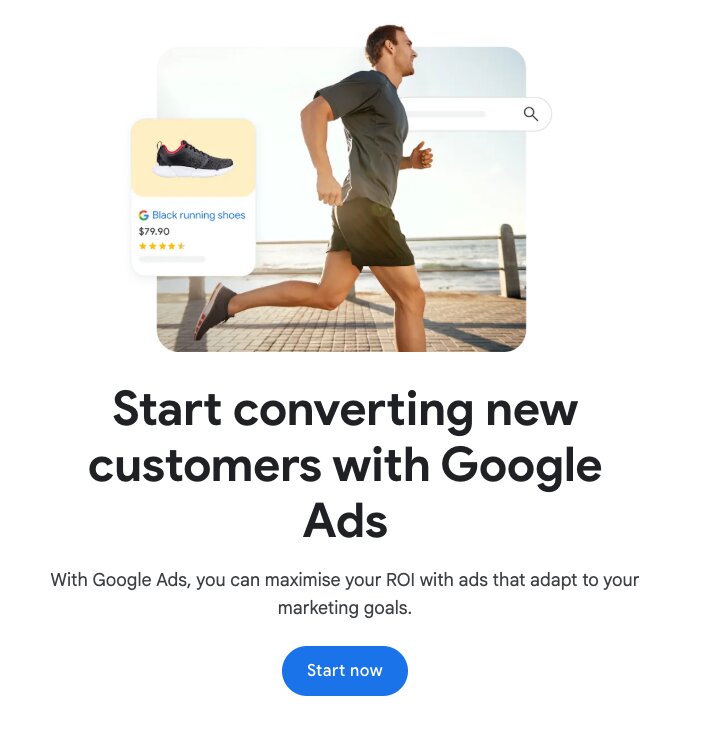
Imagine Sarah goes to Google and types:
“best running shoes for beginners”
The moment she hits Enter, Google instantly runs an automated auction among advertisers who are bidding on keywords like:
– running shoes
– beginner running shoes
– best running shoes
Google looks at:
Who is bidding on that keyword
How much they’re willing to pay per click
How relevant and good their ad is (Quality Score)
Then Google decides which ads appear at the top of the search results.
If a company’s ad appears on Sarah’s screen, that counts as 1 impression.
Even if she doesn’t click it —
just being shown on the results page = an impression.
So:
100 people search that term
The ad appears each time
That equals 100 impressions
If Sarah clicks the ad and goes to the company’s website, that counts as 1 click.
The advertiser pays Google only when someone clicks (in most search campaigns).
If nobody clicks:
They get impressions
But they don’t pay for clicks
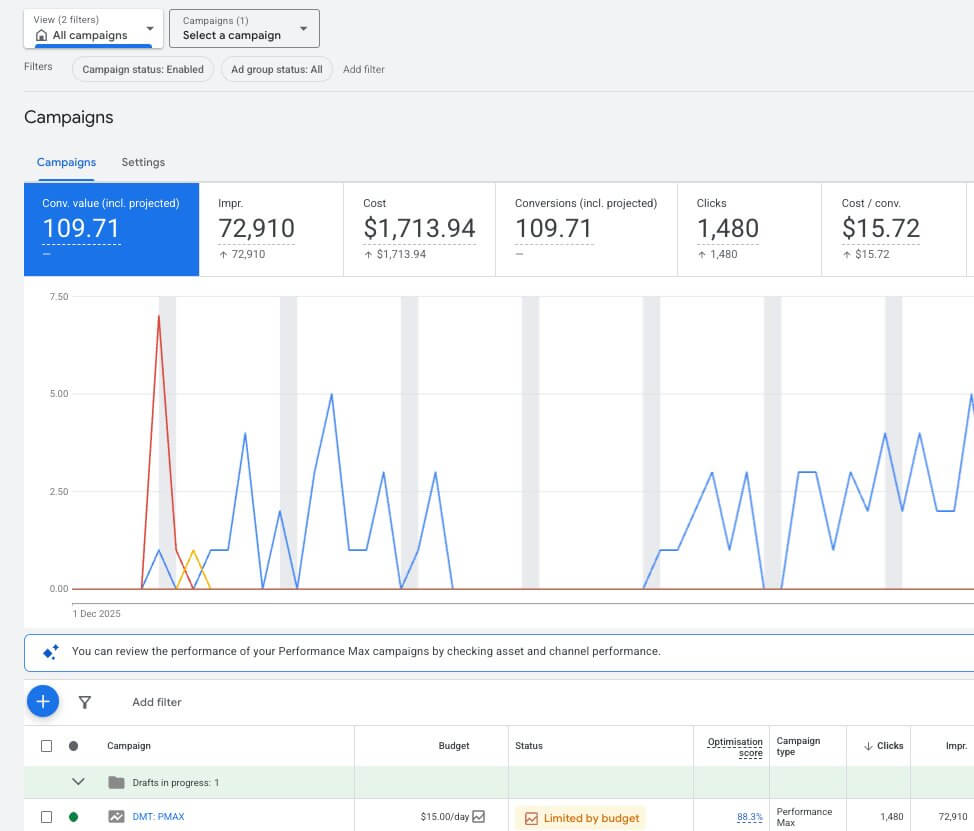
Advertisers compete in real-time auctions for keywords. The more competitive a keyword is, the higher the cost per click (CPC).
Google assigns a Quality Score based on ad relevance, expected click-through rate, and landing page experience. Higher Quality Scores often result in lower CPCs and better ad placements.
Advertising in highly competitive metro areas such as Sydney or Melbourne can cost more than targeting regional areas due to higher demand
Costs can vary depending on whether you are targeting mobile users, desktop users, or specific audience segments
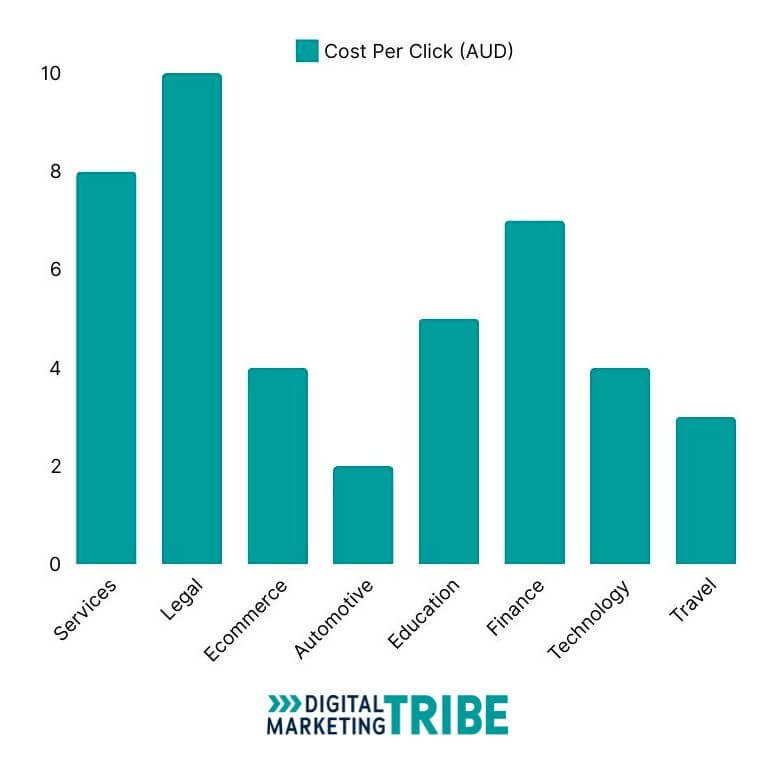
The cost of running Google Ads can vary significantly depending on several key factors. Industry type, competition level, target audience, and geographic location all influence how much you will pay per click.
businesses in less competitive industries may see average cost-per-click (CPC) rates between $3 and $5. However, in highly competitive sectors such as insurance, legal services, and real estate, CPCs can be substantially higher due to increased advertiser demand.
Google Ads CPCs differ across industries because not all clicks hold the same commercial value. Factors such as customer lifetime value, average transaction size, profit margins, and competition levels directly impact how much advertisers are willing to bid.
Industries like insurance, legal services, and finance typically experience higher CPCs because each new client can generate significant long-term revenue. This allows businesses in these sectors to justify higher bids to secure leads.
Based on our internal dashboard data, the cost per conversion for law firms can reach as high as $700, reflecting both the competitive landscape and the high value of each acquired client.
Management fees usually cover a wide range of services, including:
Comprehensive keyword research, Campaign setup and account structuring, Ad copy creation and testing, Continuous monitoring and performance tracking, Conversion tracking setup and Ongoing optimisation and detailed reporting
The depth of service and level of strategic involvement will influence fees, which vary depending on the scale and complexity of your campaigns.
Careful budget planning is essential to control costs and maximise return on investment (ROI). Key considerations include:
Daily spend limits, Monthly campaign budgets, Target cost per acquisition (CPA), Expected return on ad spend (ROAS)
Having a clear budget strategy ensures campaigns remain profitable while providing flexibility for testing and scaling.
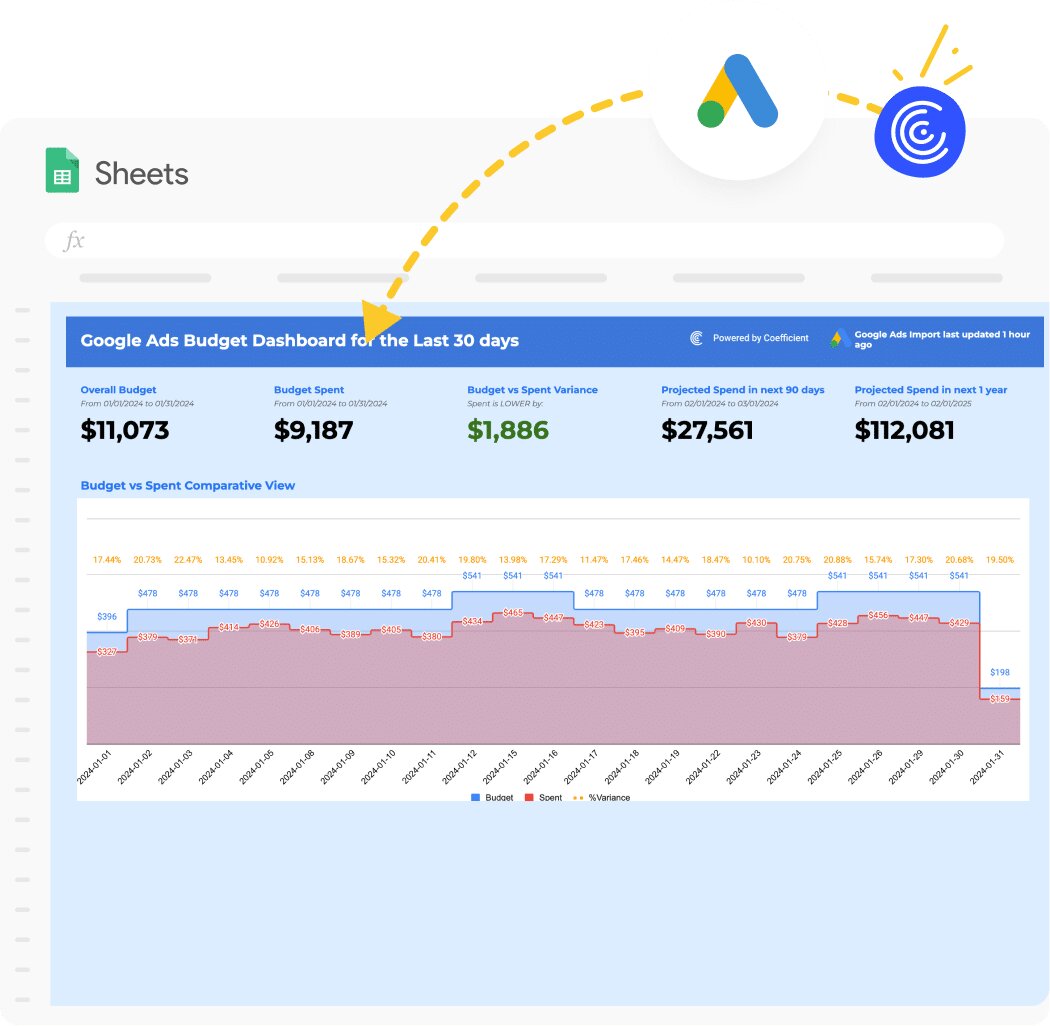
Beyond your platform spend, there are often additional tools and services required to maximise performance and ensure accurate tracking. These may include:
Click fraud protection: $69 per month
Landing page software: $199 per month
Call tracking: $100 per month
Competitor analysis tool: $200 per month
Reporting software: $60 per month
These tools help improve optimisation, track performance accurately, and protect your budget from wasted clicks. In many cases, professional Google Ads management fees include access to these third-party tools and their integrations, meaning you may not need to pay for them separately.
You can contact a Google Ads Expert in Australia by calling 1800 418 664, or by booking a consultation directly through Google. These specialists can provide guidance on account setup and campaign optimisation. However, it’s important to understand that Google representatives work for Google. Their advice is generalised and may be similar to what they provide to your competitors. Their objective is to help you spend effectively on the platform.
In contrast, a specialised Google Ads agency works directly for your business. Their strategy, optimisation decisions, and performance focus are tailored specifically to your goals, budget, and competitive landscape.

E-commerce businesses may spend anywhere from $5,000 to $30,000 per month, depending on scale and competition.
Small local businesses typically invest between $2,000 and $5,000 per month, depending on their industry and market demand.
It’s difficult to define a true average because every industry and business model is different.
Some businesses rely heavily on paid advertising to generate consistent leads and sales, while others can survive with minimal advertising.
Highly competitive industries such as legal services and insurance generally face higher advertising costs due to intense competition and high customer value.
Similarly, e-commerce businesses often depend heavily on online sales. Since revenue is directly tied to digital traffic, many e-commerce brands invest more aggressively in Google Ads to scale growth.
Google Ads is not a fixed $5,000-per-month expense. Budgets fluctuate based on business goals, seasonality, and performance.
Here are some common scenarios where businesses adjust their ad spend:
Trade businesses often increase budgets when planning to hire new staff and need more leads.
E-commerce brands ramp up spending during sales events, promotions, and peak shopping periods.
Insurance companies may scale spend when campaigns deliver strong ROI and profitable conversions.
Seasonal businesses, such as pool builders, increase or decrease budgets depending on whether demand is high (summer) or low (winter).
Your final Google Ads cost ultimately comes down to what is justifiable and profitable for your business at that time.
Ad spend should be treated as an investment, not a fixed expense. The return you receive is influenced not only by how much you spend, but also by how well your campaigns are structured, optimised, and managed.
It’s important to note that most marketing channels complement Google Ads rather than replace it. For example, SEO is often considered an alternative, but in reality, it works best alongside paid search campaigns. Running both channels in parallel can maximise visibility, traffic, and conversions.
If you’re exploring different options, it’s useful to understand how costs compare:
Facebook Ads Cost – pricing varies by audience targeting, ad format, and competition.
SEO Pricing Guide – typically involves monthly retainers or project-based fees depending on scope.
Comparing Costs and Benefits – each platform has unique advantages; decisions should be based on target audience, business objectives, and the features specific to each platform.
By understanding the strengths and costs of each channel, businesses can make informed decisions about where to invest their marketing budget for the best ROI.
Improve the relevance of your ads and the quality of your landing pages. Higher Quality Scores can reduce your cost-per-click (CPC) and improve ad positioning.
Long-tail keywords are more specific and often less competitive. They tend to cost less while attracting users who are more likely to convert.
Focus your ads on specific geographic locations where your target audience is most active. This reduces unnecessary spend in low-value areas and increases ad relevance.
Test different bidding options, such as manual CPC, enhanced CPC, or automated strategies. The right approach helps control costs while maximising campaign performance.
Continuously track campaign performance, pause underperforming ads, and optimise targeting, keywords, and creatives. Regular adjustments ensure your budget is used efficiently.



ChatGPT SEO: How to Make Your Website AI-Ready in 2026 ChatGPT SEO is the difference between being the answer ChatGPT...
Read article
As we look towards 2024, it’s clear that the SEO landscape is shifting dramatically. From the rise of AI and ma...
Read article
Do you ever try coming up with a caption on Instagram or have seen a caption and said “Wow this is the best Instagram...
Read article