
With so many people stuck at home, the world of e-commerce has gained a large amount of traffic and products are flying off the shelf.
In this article, I cover 9 solid tips that will help you engage better with your audience and increase revenue whilst the sun is still shining.
Test with real people, not assumptions. Bring in friends and family to use your site before you guess what's broken.
Speed is non-negotiable. Google's own research puts 3 seconds as the ceiling before customers start leaving.
Capture the email before you lose the sale. An abandoned cart isn't a lost customer if you already have their address.
The relationship starts, not ends, at checkout. Delivery updates and thank-you emails turn one-off buyers into repeat customers.
Reviews and scarcity both drive conversion, just differently. Reviews build trust, controlled scarcity builds desire.
Put yourself in the customer’s shoes
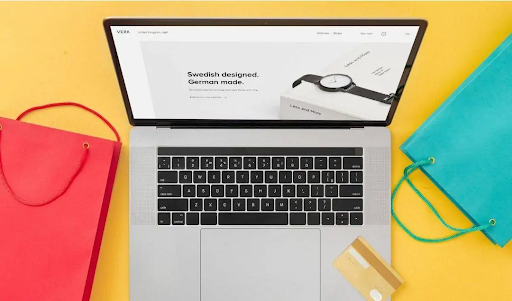
Let’s face it, living in 2020 means that you’re probably shopping online, e-commerce is dominating almost every industry. In 2018, Australia’s leading market research company Roy Morgan, found approximately 10 million Australians above the age of 14 purchased one or more products online in a month’s duration.
That’s nearly 50% of the population! Online shopping was deemed to be the third biggest category after leisure and entertainment, namely Netflix and amazon prime.
That means there are literally millions of online customer service ‘experts’ out there. You have to keep up with online features and trends, ensuring your e-commerce website is functioning spectacularly. Analyse your e-commerce website subjectively, bringing in family and friends to test drive your website to assess its usability and features.
Quiz them, and ensure you note down what works well and what is frustrating. Ensure you compare the user experience between your website and the competition, making sure you are able to add value to all visitors that enter your website. This could include more images, tips or easier navigation to various pages on your website.
DMT’s Take
Most e-commerce sites are audited by the people who built them, which is exactly the wrong group to catch usability problems, since they already know where everything is.
Your Action Plan
- Recruit 3-5 real testers. Friends and family who have never used the site before will hit friction points you can no longer see.
- Write down every hesitation, not just failures. A pause before clicking buy is as telling as an abandoned cart.
Find unbiased feedback

It’s important to gain a deeper understanding about your current and potential cliental. We advise trailing a variety of online tools to learn about how customers are using your e-commerce website, providing you with an objective view on your website’s usability.
Hottjaar.com is one that is highly recommended, it’s a fast and highly visual, helping you to understand your customers perspective and user experience. The site offers heat maps, consumer behaviour videos, conversion funnel analysis and surveys as feedback polls for under $100 a month. Don’t be a website that undervalues their user experience, through poor management and user fulfilment through customer search.
Take Amazon.com as an example, they have new stock every week with something always fresh to find and make sure customers are able to glide through the search results seamlessly, through the use of easy filters: I want a black men’s t-shirt by Russell Athletic, and Amazon will list all the current stock as selected.
DMT’s Take
Heatmaps and session recordings show what people actually do, which is usually different from what they tell you in a survey.
Your Action Plan
- Run a heatmap tool for at least 2 to 4 weeks. One week is not enough to separate real patterns from noise.
- Copy the filter logic of sites like Amazon, not the catalogue. Fast, specific filtering is the usability win, not more products.
Speed is everything

An instant turn-off for the millennial generation is slow loading download speed. Research conducted by Google highlights a maximum website loading speed of 3 seconds is vital to an optimal functioning website. Any longer than 3 seconds and you’re in dangerous territory, running the risk of your customers moving on to other websites that are faster and flashier.
So, let’s work on this, firstly, we recommend using smaller images and reducing the number of videos on your website. Next, consider reviewing your website’s hosting arrangements.
The better the web hosting service you can organise, the more you’ll be able to use your internet connection and software. Ensure you audit your website every few months, tightening and fine-tuning every aspect of your e-commerce website.
Finally, it’s highly recommended that you update your website every 2 years as technology is continuously evolving and you don’t want to be left out in the dark.
DMT’s Take
A 3-second load time is not a nice-to-have benchmark, it is the point where Google's own research shows customers start bouncing to a competitor.
Your Action Plan
- Compress images and cut unnecessary video before touching hosting. It is the fastest, cheapest speed win available.
- Audit site speed every few months, not once. New plugins and images quietly creep back in and slow things down again.
Leverage one of the only channels you own, email marketing

Think of customers as a long-term asset to your e-commerce website. You want to be able to interact with them and build a long-term relationship so that business can continue, selling your products and services to loyal customers again and again.
Consider having various points through your website, especially toward the beginning of a transaction where customers can enter their contact details, specifically their email address, as this will allow you to start and maintain a sales conversation with each customer through several weeks, months or even years.
Let’s say it’s 6:00pm on a Wednesday night, a customer is browsing through a selection of jams on your website, he’s added several varieties of jams to his cart, when suddenly a family matter arises, and he cuts off from your website and closes his laptop. This would ordinarily mean you’ve completely lost the sale.
However, if he’s provided his email address to you, you can always send him a reminder the next day at the same time, perhaps even a week later. Maybe you decide that in order to draw him back to the purchase, you offer him a 15% off coupon and a warning that you’re running low on stock and if he does not purchase the jam by the next day, he’d completely miss out on the sale creating a sense of urgency with an incentive to purchase with the added discount.
Popular clothing website The Iconic, alerts customers in a similar way, notifying customers when stock is running low on their favourite products or when they’re offering an irresistible promotion.
DMT’s Take
Every other channel you use is rented from a platform that can change its algorithm overnight. Your email list is the one audience you actually own.
Your Action Plan
- Capture email early in the checkout flow, not only at the very end. Abandoned-cart emails only work if you already have the address.
- Set up an automated abandoned-cart sequence. A single reminder email recovers sales that would otherwise be gone for good.
Communication is key

The customer’s sales journey should never end after payment, this in fact should be the very beginning of the customer’s relationship with you. Be an exceptional retailer and keep your customer well posted with details of their purchase until it reaches them.
Retail websites with excellent customer service generally keep customers up to date on the delivery time of their products, consistently advising their customers about any delays or informative content whilst they wait. This builds anticipation and provides assurance that they’ve made a great investment.
No one appreciates a delayed delivery, especially when you’re expecting something sooner but remain uninformed about how long or where your product is currently located, it leaves a poor impression. So, make sure you avoid this and ensure the freight company abides by its promises.
Don’t be that pushy salesperson that avoids your calls and refuses to recognise your existence once you’ve completed the transaction, making you wait weeks, if not months before you receive your purchase as they’re “sitting on the docks”.
All that excitement and emotional investment you once had has now been lost and you begin to develop a negative association with the product and service as the transaction is delayed, and communication ceases to exist.
DMT’s Take
The anxiety a customer feels after paying and before receiving is a trust moment most retailers waste by going silent.
Your Action Plan
- Send proactive shipping updates, especially when there is a delay. Silence reads as incompetence even when the delay is not your fault.
- Set expectations upfront on delivery timing. Under-promising and over-delivering beats a vague processing status.
Thank you, you’re important to us

Show the customer that you appreciate their support, ensuring that all purchases are attached with a heartfelt “thank you for shopping with us” email.
Most people value positive reinforcement about how great their investment was and how their purchase with you will add value to their lives. It’s the same strategy that a great salesperson provides, as you head out to the door with your new purchase.
The next thing you might want to consider is to offer customers a discount code or coupon which can be redeemed with their next purchase.
“As a token of appreciation, here’s a 15% off discount code that you are free to use at any time with your next purchase”. Depending on what platform your website is built on, you can often buy plugins that automatically generate customer service emails, ensuring that customers are followed up on without relying on staff to individually send out emails.
Great website platforms that will allow you to do this include Shopify websites like press-london.com and Tessmaes.com.
DMT’s Take
A thank-you email costs nothing and is one of the few moments a customer expects to feel appreciated rather than sold to.
Your Action Plan
- Automate a genuine thank-you email post-purchase. Most platforms have a plugin for this, so there is no excuse to skip it.
- Include a next-purchase discount code. It turns appreciation into a reason to come back.
Reviews, reviews and more reviews.
It’s highly recommended that you program your e-commerce platform to follow up with customers after their purchases. We recommend waiting about a week before sending a follow-up email, requesting customers to review the product or service they received.
It’s key to ensure that you do this well in time, during the ‘honeymoon stage’ whilst customers are still in the fulfilment and consumption phase of their purchase. This will ensure that you receive the highest number of positive reviews.
We’ve all visited Uber, Ola or even eBay at some point in our lives and picked our choice from the highest or most positively reviewed product offering, right?
Well, this is what is referred to as the Net promoter score (NPS), it’s an index that measures a customer’s willingness to recommend a product or service.
Many businesses rely on the strength of their NPS score in order to draw in more business, Airbnb is a perfect example of this.
The NPS index ranges from a score of 1-10, and you should be celebrating scores between 8 to 10, promptly listing them on your website and social media platforms, while sores that rank 7 or below should always be followed up by an apology with an aim to seek detailed feedback.
Offering disgruntled customers a discount coupon is a great way to increase customer satisfaction for those who are unhappy.
DMT’s Take
Timing matters as much as asking: request the review while the customer is still in the honeymoon phase, not weeks later once the excitement has faded.
Your Action Plan
- Automate a review request about a week after delivery. Early enough to catch genuine enthusiasm, late enough that they have used the product.
- Track your Net Promoter Score over time. It tells you whether reviews are trending up or down before revenue does.
Loyalty is royalty

Regular loyal customers are easier to retain and often more likely to spend money than most newbies, so to keep them intact ensure they sign up as club members, analyse their spending and reward them with special privileges.
Special ‘club only’ offers, invitations and discounts will make them feel special and increase their likeliness to increase their purchasing habits. Many clothing retailers and wine distributors are known to do this in order to increase satisfaction and customer retention through careful planning, selection and communication.
All customer communication, through email, text, letter or otherwise should be personalised with past purchasing trends reflected with each customer. A combination of the listed communication methods would be even better at creating a positive and long-term impact in lengthening relationships with customers.
Take this for instance, you send a regular customer a voucher via email, giving them a $25 gift card for the upcoming season. Then, a week later you post through a warm handwritten postcard wishing them the best and reminding them about the gift card, maybe even providing them with a list of new items in stock.
How could they not buy? Charles Tyrwhitt (Ctshirts.com) does this often, providing millions of customers with a $20 coupon and a handwritten, personally signed postcard with a humble message and a thank you.
DMT’s Take
Existing customers are cheaper to sell to than new ones, so a loyalty program is really a retention discount, not a cost.
Your Action Plan
- Segment customers by spend and reward the top tier. Special access and discounts work better than blanket offers.
- Personalise communication based on past purchases. Generic blasts get ignored, relevant ones get opened.
Drive demand through scarcity
Be strategic with simple economics and create a sales demand through scarcity if you have limited or premium stock.
Customers want what they can’t have and although in the modern world we’re flooded with overstocked commodities in retail stores and supermarkets, if you are in the business of expensive luxurious goods, value towards your brand and product offering can only increase if there’s exclusivity and scarcity.
Often, if your product range is always discounted or very affordable, it can lead to consumers perceiving it as ‘low in value and quality’.
Take the clothing brand Supreme for example, it creates hype with its audience through producing extremely low stock making its consumers often camp out for days to get their hands on a product.
Want help with this? Get a free, no-obligation strategy session and we will show you where the biggest opportunities are.
DMT’s Take
Scarcity only works as a strategy for products positioned as premium. Discount everything and scarcity just reads as poor stock management.
Your Action Plan
- Reserve scarcity tactics for genuinely premium or limited stock. Overusing it on everyday products erodes trust.
- Communicate limited availability clearly, not manipulatively. Customers can tell the difference between real and fake urgency.

Bilal Alwan
Bilal Alwan is the founder and director of Digital Marketing Tribe, an Adelaide and Sydney based digital marketing agency. He leads DMT’s SEO and AI search work, helping Australian businesses stay visible as search shifts from ten blue links to AI-generated answers.



Ready to Get Real Results?
Your free, no-obligation strategy session shows you exactly where the biggest opportunities are for your business.