

With so many factors affecting your website’s search engine rankings today, conducting a proper SEO audit is not a trivial task. An SEO audit should be comprehensive enough to take into account all important SEO ranking factors. At the same time, you should always be mindful of the risk of getting lost in detail and stay clearly focused on identifying your priorities moving forward.
Your SEO audit should result in an actionable plan that will have you on track for improving your search engine rankings.
Clean, correctly configured analytics is the foundation every other audit finding depends on.
Site architecture and URL structure affect crawlability as much as content quality does.
A site speed score under 90 on PageSpeed Insights should be a priority fix, not a nice-to-have.
Backlink quality now matters more than backlink quantity.
Local SEO tools like Google Business Profile matter specifically for brick-and-mortar businesses.
Data cleanliness and reliability

Collecting relevant and actionable website traffic data is the first step necessary to properly assess the starting SEO position of any website.
An SEO Audit should begin with ensuring that a website has:
- Google Analytics and Google Tag Manager set up correctly.
- The filters enabling different views of data and filtering out of the robots – properly set up.
- Goal and event tracking – including macro and micro conversions, other key actions, and ecommerce tracking where appropriate – in place and set up correctly.
- Account linking to Google Ads and Google Search Console.
DMT’s Take
An SEO audit built on incorrectly configured analytics produces confident-sounding conclusions from broken data, which is worse than having no data at all.
Your Action Plan
- Verify Google Analytics and Tag Manager are correctly configured before drawing any conclusions from the data.
- Confirm goal, event and ecommerce tracking are actually firing, not just installed.
Website traffic audit

The next step is to evaluate the existing organic traffic your website attracts.
This provides some important insights into the site’s starting position with the search engines and allows you to identify any other sources of referrals – such as direct traffic that results from visitors just typing the website URL into the browser, traffic referred by social media, etc.
Other important traffic parameters that should be evaluated during an initial SEO audit include:
- Mobile vs Desktop Users
- New vs Returning Visitors
- Visitor Breakdown by Age
- Visitor Breakdown by Gender
DMT’s Take
Understanding where your traffic actually comes from, not just how much you get, is what tells you which channels are worth investing further in.
Your Action Plan
- Break down traffic by source, device and visitor type before making any optimisation decisions.
- Compare new versus returning visitor behaviour. It reveals whether you have an acquisition or a retention problem.
Site architecture, navigation, and coding

Website architecture plays an important role when it comes to its crawlability and overall search engine friendliness.
The elements of site structure that require particular attention are:
Site navigation must be fully crawlable, with no broken links. Descriptive and relevant anchor text should be used for internal links wherever possible.
- URL Taxonomy – the way in which information the website contains is organised by type and topic. It is crucial that the URLs on your site form a consistent pattern and are sequential.
- Indexation – ensuring that meta descriptions are used appropriately and that only one version of the site is indexed.
- Search and user friendliness of the site’s URLs.
- Appropriate use of tags and the internal linking structure that points to high value pages within the site.
- Structured data mark-up – important for generating rich snippets that Google may display for certain content types.
- Clean coding practices – optimised code, valid HTML, external CSS and JavaScript files, and valid SSL certificates – all contribute to better crawlability and loading speed and, consequently, to improved rankings.
DMT’s Take
A site with broken internal links or an inconsistent URL structure is fighting itself for rankings, regardless of how good the content on individual pages is.
Your Action Plan
- Audit for broken internal links and inconsistent URL patterns. Both directly affect crawlability.
- Use descriptive, relevant anchor text for internal links rather than generic click here text.
Site speed and mobile friendliness
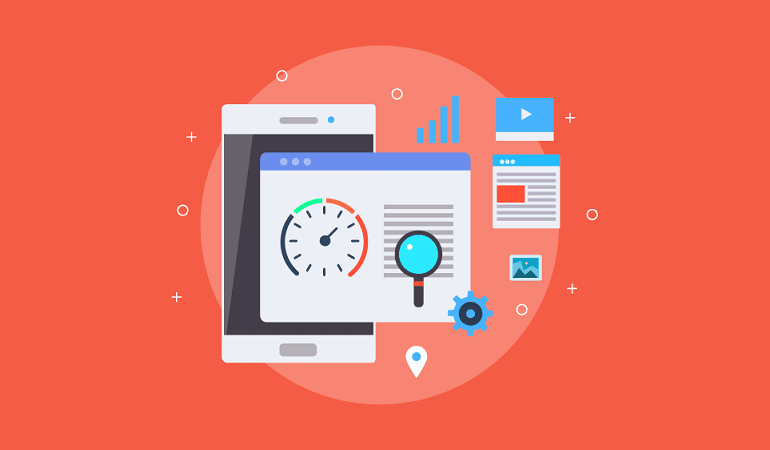
Your site’s loading speed is extremely important both in terms of user experience and as an important search engine ranking factor. You need to pay particular attention to:
- Google Page Speed Insights rankings. This tool evaluates a website speed by giving it a ranking out of 100. The Mobile and Desktop versions of the website are assessed separately. Any ranking under 90 should be addressed as a priority as it can negatively affect your site’s standing with search engines.
- Server loading speed is also highly relevant as it can affect how much of the website is indexed by search engines.
- Mobile friendliness has been one of the major Google ranking factors for the past few years. Mobile versions – not the desktop versions – of websites are now the first to be crawled by Google. A non-mobile friendly site has a direct negative impact on search engine rankings and should be addressed as a matter of urgency.
DMT’s Take
A PageSpeed score under 90 is worth treating as a priority fix, not a background task, since it is both a direct ranking factor and a conversion killer.
Your Action Plan
- Run your site through Google PageSpeed Insights and treat any score under 90 as a priority fix.
- Check mobile and desktop speed separately. Google indexes the mobile version first.
Keywords and content structure

The importance of a website’s content for its SEO rankings is hard to overestimate.
Google now uses a special algorithm called Semantic Search to figure out how the knowledge your website provides should be classed in terms of its uniqueness and relevance.
As a result, certain search terms are assigned to your website that represents the data it contains. Then your website is ranked in relation to other websites based on its ability to semantically match your content to that search term.
Over the past four years, Google has been extensively focussing on improving the quality of its search listings, paying particular attention to identifying and rewarding unique, non-duplicated content.
Panda – an algorithm created to ensure that websites with poor content are ranked lower – has been part of Google’s core search algorithm since 2016.
How you present and organise your content is also extremely important. Some page elements to pay particular attention to are:
- Page titles. These need to be unique, relevant, and SE optimised, as they are prominently displayed in the list of search result rankings and directly affect the click through rate – which, in turn, affects your website’s search engine rankings.
- H1 headings. As search engines rely on H1s to determine what the page is about, these headings are also of utmost importance and should be unique, descriptive – and present on every page of your website.
- Other headings. The other headings are also important, both in terms of user experience and for helping search engines to understand the subtopics and keywords within a page.
DMT’s Take
Google's semantic search now evaluates content for genuine uniqueness and relevance, not just keyword presence, so thin or duplicated content is actively penalised, not just ignored.
Your Action Plan
- Audit for duplicate or thin content across the site. It actively drags down rankings under Google's Panda-descended systems.
- Map content to the search terms it should semantically match, not just the exact keywords it contains.
Backlink analysis

Links that point to your website remain an important ranking factor. Google now has an algorithm - called Penguin - in place to ensure that websites with poor links, manipulated links, or over optimised links make websites rank lower.
Some important factors to consider are:
Overall, today the higher linking domain authority should be prioritised over the total number of links.
- Total number of links.
- Total number of linking domains.
- Linking domain authority.
- Link toxicity.
DMT’s Take
Domain authority of the sites linking to you now matters more than the raw number of links, which changes what a genuinely good backlink profile looks like.
Your Action Plan
- Prioritise backlink quality and relevance over total link count in your audit.
- Check for toxic or manipulated links that could be dragging your site down under Google's Penguin-descended systems.
Local SEO

For websites of brick-and-mortar businesses, paying attention to local SEO can make a huge positive difference.
Some important local SEO tools are:
Does your website need a complete SEO audit? We at Digital Tribe can help! Contact us today to take your SEO game to the next level!
- Google My Business
- Bing Places
- Apple Maps
- Google Reviews
- NAP (name, address, phone) of your business listed in the footer of every page of your website.
Want help with this? Get a free, no-obligation strategy session and we will show you where the biggest opportunities are.
DMT’s Take
For any brick-and-mortar business, local SEO tools are not optional extras, they are core infrastructure for being found at all.
Your Action Plan
- Ensure your business is listed and accurate across Google Business Profile, Bing Places and Apple Maps.
- Keep your NAP, name, address and phone number, consistent in your website footer and every directory listing.

Bilal Alwan
Bilal Alwan is the founder and director of Digital Marketing Tribe, an Adelaide and Sydney based digital marketing agency. He leads DMT’s SEO and AI search work, helping Australian businesses stay visible as search shifts from ten blue links to AI-generated answers.



Ready to Get Real Results?
Your free, no-obligation strategy session shows you exactly where the biggest opportunities are for your business.